
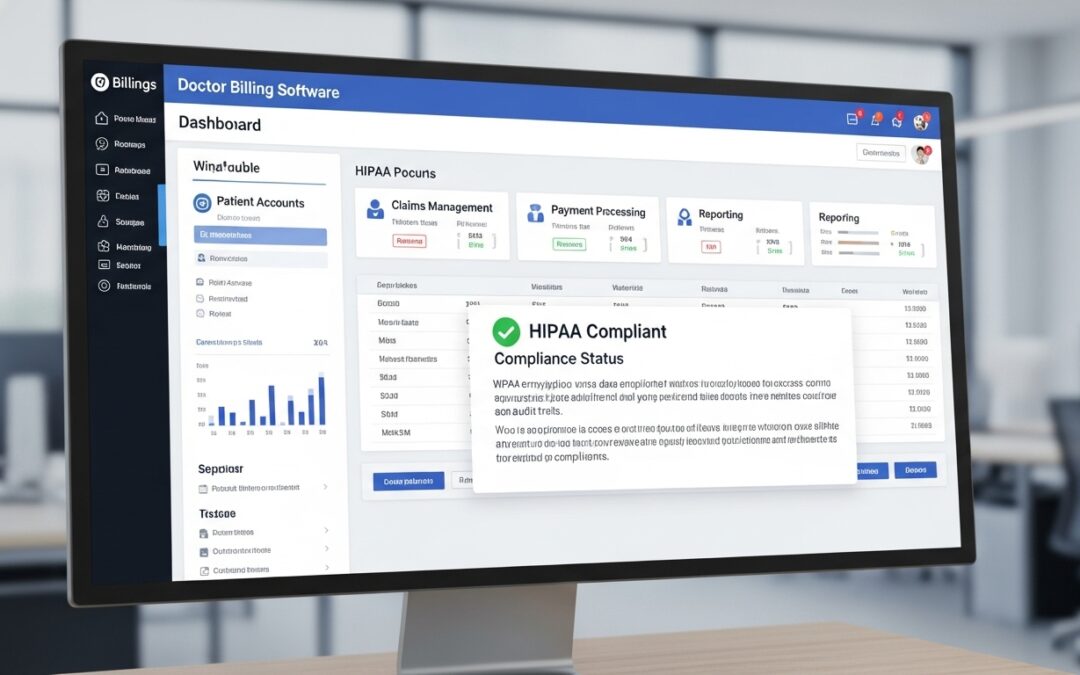
In modern-day digital healthcare, safeguarding our patients’ information is equally crucial as quality healthcare. Healthcare institutions store sensitive information daily, including patients’ medical records, insurance billing, test results, and medication information. When transmitted electronically or shared with third-party contractors, it is crucial to ensure HIPAA policies are maintained. Many healthcare institutions outsource medical billing to make their processes more efficient and ease the burden of administrative work. However, mistakenly selecting an incompetent billing service company can entail serious risks. An inaccurate billing partner with no knowledge of the appropriate HIPAA policies puts your organization in danger of data leaks as well as financial and legal losses.
Healthcare organization should ask a number of essential questions prior to outsourcing the billing process to secure compliance with the HIPAA regulations, data security, staff training and internal procedures.
What Is the Meaning of HIPAA Compliance in Medical Billings?
HIPAA is an abbreviation for the Health Insurance Portability and Accountability Act, which sets criteria for guarding the secrecy of protected health information (PHI). Therefore, any medical billing company that works with PHI on behalf of the healthcare provider is obliged to take security measures.A few examples of PHI typically dealt with in medical billing are:
– Records of the patients’ medical history;
– Information about medical insurance;
– Details concerning the billing process;
– Results of laboratory tests and diagnostics;
– Facts about medications prescribed to patients;
– Personal information about patients;
– Claims and reimbursement data.
Since medical billing companies have access to highly confidential and sensitive information about patients, healthcare providers need to consider the security measures and compliance followed by such companies before signing a contract with them.
Why compliance with HIPAA regulations is vital for outsourcing medical billing
Outsourcing billing to third parties does not mean that a healthcare provider will not be responsible for the protection of the patients’ information in case of the unethical usage of PHI by the billing vendor. If the company misuses the patients’ data, then the healthcare organization may end up facing severe repercussions for their actions.A knowledgeable provider of medical billing services will have certain policies and regulations implemented in order to prevent unauthorized access, loss, or alteration of PHI. The billing provider must also know its responsibilities as a business associate and keep certain agreements and safeguards in place.
Finding a trustworthy billing service will help your medical
Financial consequences
Plans for corrective action and regulation
Legal costs
Litigation and legal accountability
Criminal sanctions for some deliberate breaches
Patient faith is lost
Long-term harm to reputation
The financial implications of a data breach may go beyond regulatory sanctions. Entities would have to incur other expenses such as investigation of the incident, informing affected parties, reinstating operations, improving security measures, and regaining patient trust.
HIPAA Risks Are Relevant to Small Practices, Too
HIPAA compliance is not an issue only for large healthcare facilities. Small healthcare practices, doctors’ offices, specialized clinics, and independent providers deal with sensitive patient data, so they should take all the necessary measures to ensure protection of this information.For small practices, risky incidents can have even more destructive effects as they might not possess sufficient resources for recovery. Collaborating with compliant companies in the field of medical billing helps minimize risks.
Common Reasons for HIPAA Breaches
HIPAA violations are not only about cyberattack sophistication. Most violations happen as a result of common
administrative errors, lack of effective security measures, and insufficient staff training.
The most common causes of HIPAA violations are:
Not encrypting sensitive data and devices
Use of weak passwords or passwords known
Questions You Should Ask Before Hiring Your Medical Billing Company
If you don’t want to make a wrong choice in selecting your medical billing partner, make sure to ask the following questions:
1. Are you HIPAA compliant?
This is one of the first questions to ask. Get to learn about the organization’s policies and practices in terms of HIPAA compliance.
2. Do you sign a Business Associate Agreement?
It’s important to enter a Business Associate Agreement in order to define the responsibilities of the healthcare provider and the billing partner.
3. How do you ensure patient data protection?
It’s important to know how the billing company protects its PHI while storing and transmitting it. It means that effective measures should be used whenever confidential health information is stored.
4. How do you control data access by employees?
As not every employee requires the same access to the patient records, the billing company should definitely make sure that the data is protected from unauthorized personnel.
5. How do you train your employees?
It’s common knowledge that HIPAA compliance largely depends on the behavior of the employees. You should learn whether the employees typically undergo training in HIPAA and Cyber Security.
FAQs
1. Why is HIPAA compliance important for medical billing companies?
Medical billing companies often access protected health information while processing claims and managing patient billing. HIPAA compliance helps ensure that this information is handled securely and only accessed or disclosed appropriately.
2. What should I ask a medical billing company about HIPAA?
Ask whether the company is HIPAA compliant, whether it signs a Business Associate Agreement, how it protects and encrypts PHI, how employee access is controlled, how staff are trained, and what procedures are followed in the event of a data breach.