
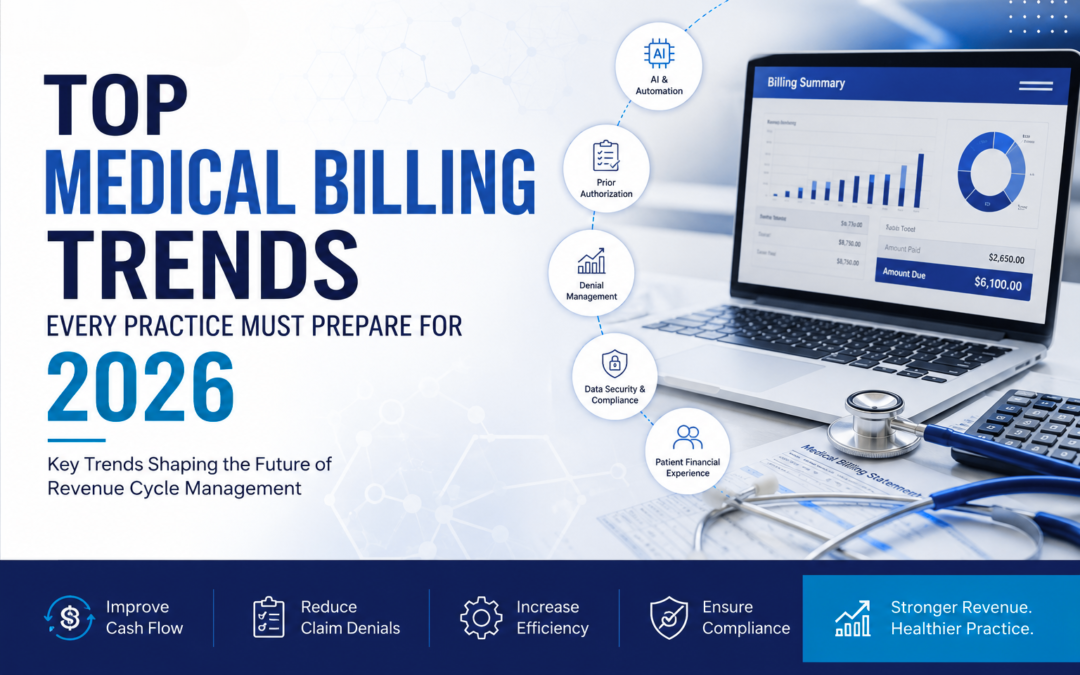
The healthcare industry continues to progress quickly, and medical billing is shifting along with it. In 2026, healthcare providers are encountering new challenges that openly impact reimbursement, claim approval rates, patient satisfaction, and operational capability. From artificial intelligence to stricter payer requirements, practices that Flop to adapt may struggle with delayed payments and increasing administrative pressure.
For providers, understanding the current medical billing trends is no longer optional. It is now vital for protecting revenue and maintaining even daily operations. Healthcare organisations across the country are looking for smarter ways to curtail denials, upgrade claim accuracy, automate workflows, and stay flexible with changing regulations.
As the command for efficient revenue cycle management grows, companies like Total Medx are helping healthcare providers conduct these changes through advanced billing strategies and optimised RCM solutions. The future of medical billing is becoming more data-driven, Self-operating, and patient-focused than ever before.
Artificial Intelligence is Transforming Medical Billing
Artificial intelligence has become one of the top healthcare billing patterns in recent years. In 2026, AI-powered billing systems will help providers lower manual work, improve coding accuracy, and verify claim errors before submission.
Traditional billing workflows often depend strongly on human review, which enhances the risk of mistakes and overdue reimbursements. AI technology can now study claims in real time, identify missing information, and Possible problems before claims reach payers.
This shift is helping practices improve clean claim rates while decreasing administrative costs. Many healthcare unions are also using predictive analytics to identify denial patterns and improve billing insight over time.
AI is especially valuable in:
- Claim scrubbing
- Eligibility verification
- Coding assistance
- Denial prediction
- Payment trend analysis
- Revenue forecasting
As payer rules become more elaborate, AI-driven billing solutions are expected to play an even larger role in revenue cycle management.
Rising Claim Denials Maintain to Challenge Providers
One of the most alarming billing trends in 2026 is the continued increase in claim denials. Healthcare providers across various specialities are reporting higher denial rates due to stricter payer audits, permission requirements, and coding errors.
Denied claims create significant financial pressure for medical practices because they slow cash flow and increase administrative workload. In many cases, denied claims need various rounds of appeals, which consume useful staff time.
Common reasons for medical billing denials include:
- Incorrect patient information
- Missing modifiers
- Authorization failures
- Inaccurate coding
- Incomplete documentation
- Eligibility issues
To minimise denials, practices are investing in automated denial management systems and stronger front-end verification methods. Real-time eligibility checks and automated claim review tools are helping providers catch issues before submission.
Healthcare organisations that focus on denial prevention rather than denial correction are seeing faster reimbursement and improved financial stability.
Prior Authorisation Requirements Are Becoming More Complex
Prior authorisation remains one of the most complex bottlenecks for healthcare providers. In 2026, payers continue to boost authorisation requirements for procedures, imaging services, medications, and tailored medical care.
Authorisation delays mostly lead to postponed care, denied claims, and patient frustration. Medical practices are a major investment of time spent communicating with insurance companies and maintaining approval requests.
To optimise efficiency, many Unions are adopting electronic prior authorisation solutions that combine directly with electronic health record systems.
Key benefits of automated prior authorisation tools include:
- Faster approvals
- Reduced paperwork
- Improved communication
- Lower denial rates
- Better patient scheduling
As insurance companies continue tightening utilisation controls, efficient authorisation management will become even more important for revenue cycle management performance.
Automation is Reducing Administrative Burden
Healthcare staffing lack continues to impact billing departments nationwide. Because of this, automation has become a main priority for medical practices looking to enhance efficiency without increasing labour costs.
In 2026, more healthcare organisations are automating repetitive billing tasks such as:
- Insurance verification
- Payment posting
- Claim status tracking
- Appointment reminders
- Patient billing notifications
- Accounts receivable follow-up
Automation reduces manual errors while allowing staff to focus on higher-value duties. Practices that execute workflow automation are often able to process claims faster and reduce outstanding balances.
Automated billing systems also improve communication between departments, helping providers maintain smoother financial operations.
Patient Financial Accountability is increasing
Consumer-directed health plans continue to shift more financial responsibility to patients. As a result, medical practices now maintain patient collections more carefully than ever before.
In 2026, healthcare consumers expect transparent billing, flexible payment options, and digital payment experiences similar to those in other industries.
Practices are responding by offering:
- Online payment portals
- Payment plans
- Mobile billing options
- Automated reminders
- Cost estimates before treatment
Clear communication regarding medical costs is becoming essential for maintaining patient satisfaction and reducing unpaid balances.
Healthcare providers who improve the patient financial experience are seeing stronger collection rates and better patient retention.
Value-Based Care is Changing Revenue Cycle Management
The healthcare industry continues shifting from fee-for-service reimbursement toward value-based care models. Instead of focusing only on treatment volume, providers are increasingly being evaluated based on patient outcomes and quality performance.
This transition is directly affecting medical billing and coding processes.
Value-based reimbursement models often require:
- Detailed clinical documentation
- Quality reporting
- Accurate coding
- Performance tracking
- Care coordination reporting
Medical practices that fail to document properly may face reduced reimbursement or compliance risks.
As value-based care expands, billing teams must work more closely with clinical staff to ensure accurate reporting and optimised reimbursement.
Cybersecurity is Becoming a Major Healthcare Billing Concern
Healthcare organisations remain one of the biggest targets for cyberattacks. Medical billing systems contain sensitive patient and financial information, making cybersecurity a critical priority in 2026.
Ransomware attacks, phishing attempts, and data breaches continue increasing across the healthcare industry. Even small medical practices are becoming targets for cybercriminals.
Healthcare providers are investing in:
- Secure billing software
- Multi-factor authentication
- Data encryption
- HIPAA-compliant systems
- Staff cybersecurity training
Protecting patient data is essential not only for compliance but also for maintaining patient trust and operational continuity.
A single data breach can create serious financial and reputational damage for healthcare organisations.
Interoperability is Improving Billing Accuracy
Interoperability refers to the ability of healthcare systems to exchange information efficiently across platforms. In 2026, interoperability is becoming increasingly important for medical billing and revenue cycle management.
Connected healthcare systems help reduce billing errors by improving access to accurate patient data.
Benefits of interoperability include:
- Faster eligibility verification
- Better claims accuracy
- Reduced duplicate records
- Improved care coordination
- More efficient billing workflows
FHIR-based healthcare technology is also helping providers improve communication between EHR systems, laboratories, payers, and billing platforms.
As interoperability standards continue evolving, medical practices that modernise their systems will gain a significant operational advantage.
Predictive Analytics is Driving Smarter Revenue Strategies
Predictive analytics is quickly becoming one of the most valuable tools in modern revenue cycle management.
Healthcare organisations are using predictive data models to analyse billing trends, identify financial risks, and forecast reimbursement outcomes.
Predictive analytics can help practices:
- Detect denial patterns
- Identify slow-paying payers
- Improve collection strategies
- Forecast revenue trends
- Reduce claim rejection rates
Instead of reacting to financial problems after they occur, practices can now make proactive decisions using real-time billing insights.
This data-driven approach is helping providers improve financial performance while reducing operational inefficiencies.
Outsourcing Medical Billing is Continuing to Grow
Many healthcare providers are choosing to outsource medical billing services to improve efficiency and reduce administrative strain.
Managing billing internally can become difficult due to:
- Staffing shortages
- Frequent coding changes
- Complex payer rules
- Increasing denial rates
- Compliance requirements
Outsourced medical billing companies provide specialised expertise, advanced technology, and dedicated denial management support.
Benefits of outsourcing include:
- Faster reimbursements
- Reduced overhead costs
- Improved coding accuracy
- Better compliance management
- Enhanced reporting and analytics
As healthcare regulations become more complex, outsourcing continues to be an attractive solution for practices seeking financial stability.
Telehealth Billing Remains a Key Focus
Telehealth services experienced massive growth in recent years, and virtual care billing remains a major healthcare trend in 2026.
Although telehealth adoption is stabilising, reimbursement requirements continue to change across payers and states.
Providers must stay updated on:
- Telehealth CPT codes
- Modifier requirements
- Audio-only billing rules
- Cross-state billing regulations
- Documentation requirements
Incorrect telehealth billing can quickly lead to denied claims and compliance issues.
Healthcare organisations that maintain updated telehealth billing processes are better positioned to capture reimbursement opportunities while supporting patient convenience.
Real-Time Eligibility Verification is Becoming Essential
Eligibility verification errors remain one of the leading causes of claim denials. In response, practices are increasingly adopting real-time insurance verification systems.
These systems help staff confirm:
- Active insurance coverage
- Deductible amounts
- Copayment responsibilities
- Authorization requirements
- Coverage limitations
Real-time verification improves front-end accuracy and reduces costly billing errors later in the revenue cycle.
By identifying insurance issues before appointments, practices can improve collections and reduce denied claims significantly.
Regulatory Changes Continue to Impact Medical Billing
Healthcare requirements continue to change rapidly, and providers must stay informed to avoid compliance risks and reimbursement issues.
Important regulatory trends in 2026 include:
- Updated CMS reimbursement rules
- Coding guideline changes
- Transparency requirements
- Expanded audit activity
- HIPAA compliance updates
Billing teams must frequently review payer strategy and coding updates to maintain compliance and reduce financial risk.
Practices that fail to adapt to regulatory changes may face payment delays, penalties, or increased audit exposure.
Data-Driven Decision Making is Becoming Standard
Healthcare organisations are depending more heavily on analytics dashboards and reporting tools to monitor financial performance.
Modern billing platforms now provide detailed insights into:
- Denial trends
- Collection performance
- Accounts receivable ageing
- Payer reimbursement patterns
- Coding accuracy rates
These insights help leadership teams make informed decisions and improve operational efficiency.
Data transparency is becoming a major competitive advantage in healthcare revenue management.
Staff Training and Education Are More Important Than Ever
The complexity of medical billing continues to increase each year. Coding updates, payer policy changes, and new reimbursement models require ongoing staff education.
Practices are investing more in:
- Coding certification programs
- Revenue cycle training
- Compliance education
- Billing software training
- Documentation improvement initiatives
Well-trained billing teams are better equipped to reduce errors, improve reimbursement rates, and maintain compliance.
Continuous education is now considered a critical part of successful revenue cycle management.
Conclusion
The healthcare industry is joining a new era of medical billing and revenue cycle management. In 2026, providers must prepare for important changes involving artificial intelligence, automation, cybersecurity, interoperability, denial management, and value-based reimbursement.
Medical practices that accept trending billing technologies and proactive revenue strategies will be better positioned to improve financial performance, reduce administrative stress, and maintain compliance in an increasingly complex healthcare environment.
Understanding these top medical billing trends every practice must prepare for in 2026 can help healthcare organisations stay competitive while improving operational efficiency and patient satisfaction.
As the industry continues evolving, healthcare providers looking to strengthen their billing performance and revenue cycle operations are turning to trusted partners like Total Medx for smarter, more efficient medical billing solutions.